


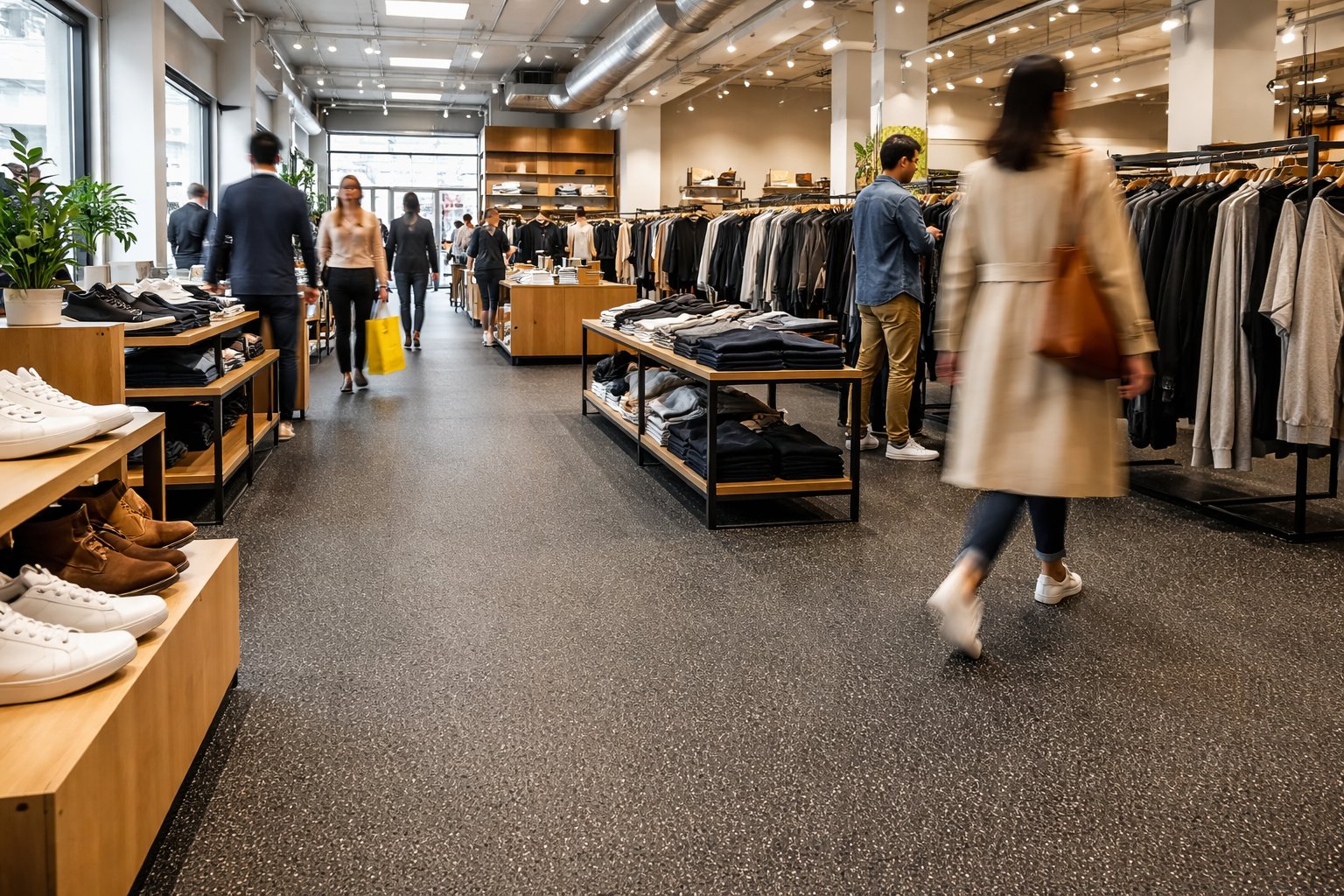
Running a retail space in New York City is not for the faint of heart. Between the constant foot traffic, the delivery carts, the spilled coffee, and the customers who track in everything from Brooklyn sidewalk grime to midtown slush, your floors take a beating that most residential products simply were not built to handle. And yet, flooring is one of the last things many business owners think seriously about until something goes wrong.
That is exactly where rubber flooring earns its reputation. It is not flashy. It does not show up on mood boards the way herringbone hardwood does. But for NYC retail environments where durability, safety, and long-term value actually matter, it is one of the most intelligent flooring decisions a business owner can make.
The punishment NYC retail floors take every single day
Think about what a busy retail floor in Brooklyn or Manhattan actually goes through. Hundreds of customers walking in from wet sidewalks. Rolling racks and hand trucks. Display fixtures being rearranged. Kids running between aisles. Heavy merchandise dropped without warning. Now think about how most standard commercial flooring responds to that kind of treatment over months and years. Tile chips. Luxury vinyl scuffs and dents under heavy point loads. Hardwood warps when water gets in repeatedly.
Rubber is different. It was engineered specifically for environments where impact, compression, and moisture are daily realities. It absorbs force rather than cracking under it, which is why you will find it in gyms, hospitals, airports, and transit stations throughout the city. Those are not industries that make flooring decisions lightly.
Why slip resistance is not optional in a retail environment
New York City winters bring slush. Spring brings rain. Summer brings air conditioning condensation dripping near entryways. Year-round, your customers are walking in from conditions that turn smooth floors into liability waiting to happen. Rubber flooring provides a naturally textured surface that maintains grip even when wet, which is one of the primary reasons it is the specification of choice for commercial environments where safety codes are strict and the cost of a slip-and-fall incident goes far beyond the floor itself.
For retailers near busy subway entrances or street-level storefronts in high-pedestrian neighborhoods like Bay Ridge, Park Slope, or the Financial District, that built-in slip resistance is not a nice-to-have. It is essential.
Noise reduction in an open retail floor plan
Open retail floor plans look great in design renderings. In practice, they can get loud quickly, especially in a busy NYC storefront where hard surfaces bounce sound around and every transaction, conversation, and dropped item echoes. Rubber is an excellent acoustic insulator. It absorbs impact sound rather than transmitting it, keeping the environment comfortable for both customers and staff. In a space where the shopping experience directly affects whether a customer stays and buys, that acoustic comfort matters more than most retailers realize.
The maintenance reality that saves money over time
One of the most compelling arguments for rubber flooring in a retail setting is what it costs to maintain compared to other commercial options. It does not need refinishing. It does not require waxing or polishing. Routine cleaning is straightforward and does not require specialized products or professional services. For a business owner managing tight margins across a Brooklyn or Queens retail location, that reduced maintenance burden adds up meaningfully over the life of the floor.
It is also resistant to most chemicals commonly used in retail cleaning protocols, so you are not limited in what products you can safely use on the surface.
How installation and specification affect long-term performance
Not all rubber flooring performs the same way, and how it is specified and installed matters as much as the product itself. Thickness, tile versus roll format, interlocking versus glue-down installation, surface texture, and color all affect both performance and appearance. Getting those decisions right from the start is where working with experienced commercial flooring installation professionals makes a genuine difference.
A flooring expert who understands the specific demands of your space, your subfloor condition, and your foot traffic patterns will help you avoid the costly mistakes that come from treating a commercial specification like a residential one.
What to consider before committing to a product
Before selecting a rubber flooring product for your retail space, it is worth asking a few specific questions. What is the expected daily foot traffic count? Are there areas where heavy rolling equipment will be used regularly? Is moisture a consistent issue near entryways or in basement-level spaces? Are there brand or aesthetic requirements that affect color and finish selection? The answers to those questions directly shape the right product specification, and they are exactly the kind of conversation our flooring services team is equipped to have with you.
Thinking beyond the floor you have now
If your current retail floor is showing its age, holding onto it while traffic continues to compound the damage is rarely the practical choice. The cost of replacement only increases when subfloor damage develops underneath a failing surface.
Let your floor work as hard as your business does
Bay Ridge Carpet & Linoleum Corp serves retail and commercial clients across Brooklyn, Manhattan, Queens, Staten Island, and the Bronx. Whether you are outfitting a new location or replacing a floor that has finally had enough, our team brings the expertise to get it right. Prefer to start the conversation on your schedule? Our shop at home service makes it easy to explore your options without stepping away from your business.


