


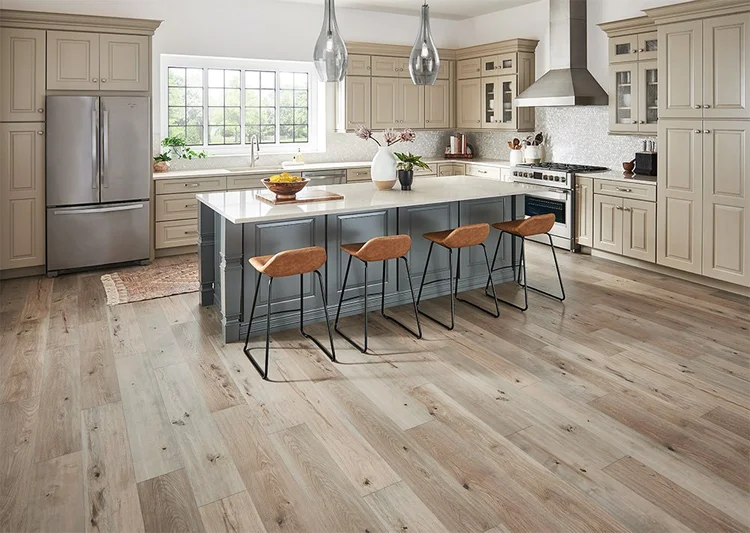
New York City weather puts residential floors through punishing conditions every winter and spring. Urban streets bring a steady stream of melting slush, coarse rock salt, and abrasive sidewalk grit directly through front doors. Traditional materials often struggle in these high-exposure transition zones, swelling at the joints or showing permanent scratches within a few seasons. Installing waterproof laminate gives your home the rich visual character of natural wood alongside dense structural protection engineered to stop standing liquid from penetrating the floorboards.
Urban Transition Zones That Demand Moisture Protection
City layouts concentrate daily family wear into small, heavily traveled square footage. Whether you live in a pre-war Brooklyn brownstone or a modern Manhattan condo, your transition areas take the brunt of daily foot traffic and damp footwear.
Apartment Foyer and Entryway Demands
.jpg)
City apartment entries open straight into the primary living area without deep vestibules to catch wet debris. Walking across wet sidewalks coats boot treads with dirty water and road de-icers that eat through traditional floor finishes. Modern waterproof flooring stops moisture right at the doorway, preventing water damage from spreading toward adjacent interior rooms.
Historic Brownstone Mudroom Realities
.jpg)
Ground-level garden entrances in Park Slope, Brooklyn Heights, and Cobble Hill sit directly at grade. These garden mudrooms collect damp umbrellas, muddy dog paws, and heavy utility gear from backyard access corridors. The dense core of modern laminate prevents swelling along the perimeter where drafts and outdoor temperature swings meet cold subfloors.
Kitchen Splash Zones
NYC kitchens handle continuous moisture risks from dishwashers, ice makers, boiling pots, and sink run-off. Dropped pots and heavy metal prep tools can crack traditional ceramic tile or deeply dent soft hardwood planks. Heavy-duty laminate wear layers stop surface gouging while watertight locking seams prevent sink splashes from penetrating subfloor seams.
Key Advantages of Modern Waterproof Laminate
Advancements in manufacturing have replaced old fiberboard designs with rigid, moisture-impermeable boards that protect city residences against seasonal accidents and daily wear.
Hydrophobic Locking Systems: Tight mechanical click joints press edges together with hydrophobic coatings that prevent surface spills from seeping beneath the floor.
Melamine Resin Wear Layers: Hard exterior finishes resist the abrasive scratching caused by tracked-in street grit, dog nails, and heavy dragged items.
Realistic Hardwood Visuals: High-definition print patterns and embossed grain textures mimic white oak, walnut, and chestnut without the high maintenance of solid lumber.
Built-In Acoustic Performance: Premium acoustic underlayments help meet building sound standards for multi-family co-op and condo boards across Queens, Brooklyn, and Manhattan.
Structural Dimensional Stability: Dense cores resist expansion and contraction caused by humid East Coast summers and dry radiator-heated winters.
Acoustic Standards in Multi-Family Living
Co-op boards and condo associations enforce strict acoustic ratings to prevent footsteps and impact noise from traveling between units. Your building will often specify thresholds for Impact Insulation Class (IIC) and Sound Transmission Class (STC) ratings before approving any hard surface installation. Pairing modern laminate with high-density rubber or cork underlayment absorbs footfalls from heavy work boots in your entryway, keeping neighbors below undisturbed while complying fully with strict property alteration agreements.
Upgrade Your Home with Local Flooring Specialists
Selecting the right surface for high-traffic entryways and busy kitchens requires evaluating plank textures, board thicknesses, and acoustic underlayments directly. Our family team at Bay Ridge Carpet & Linoleum Corp brings decades of experience matching New York properties with resilient flooring solutions. Visit our showroom at in Brooklyn, NY to examine full sample displays in person, or schedule a convenient shop-at-home appointment to view plank colors directly under your home's natural lighting. You can also request a free estimate online to start planning your renovation today.
Frequently Asked Questions
How does waterproof laminate differ from traditional laminate flooring?
Traditional laminate uses wood fiber cores that swell and buckle permanently when liquid sits on the surface. Modern waterproof designs feature dense non-porous cores and bevels sealed with water-repellent polymers, allowing the planks to hold standing water without edge warping.
Can waterproof laminate handle NYC winter road salt and slush?
The tough aluminum oxide surface wear layer resists chemical etching and scratches from coarse sidewalk salt. Simply wipe away tracked-in slush and dirt with a damp microfiber cloth to keep the protective clear finish clean and unblemished.
Is waterproof laminate safe to install over uneven pre-war subfloors?
Older buildings throughout Brooklyn and Manhattan frequently have sloped or wavy subfloors. High-quality underlayment bridges minor surface imperfections, but checking subfloor flatness ensures locking joints do not experience excess vertical strain.


