


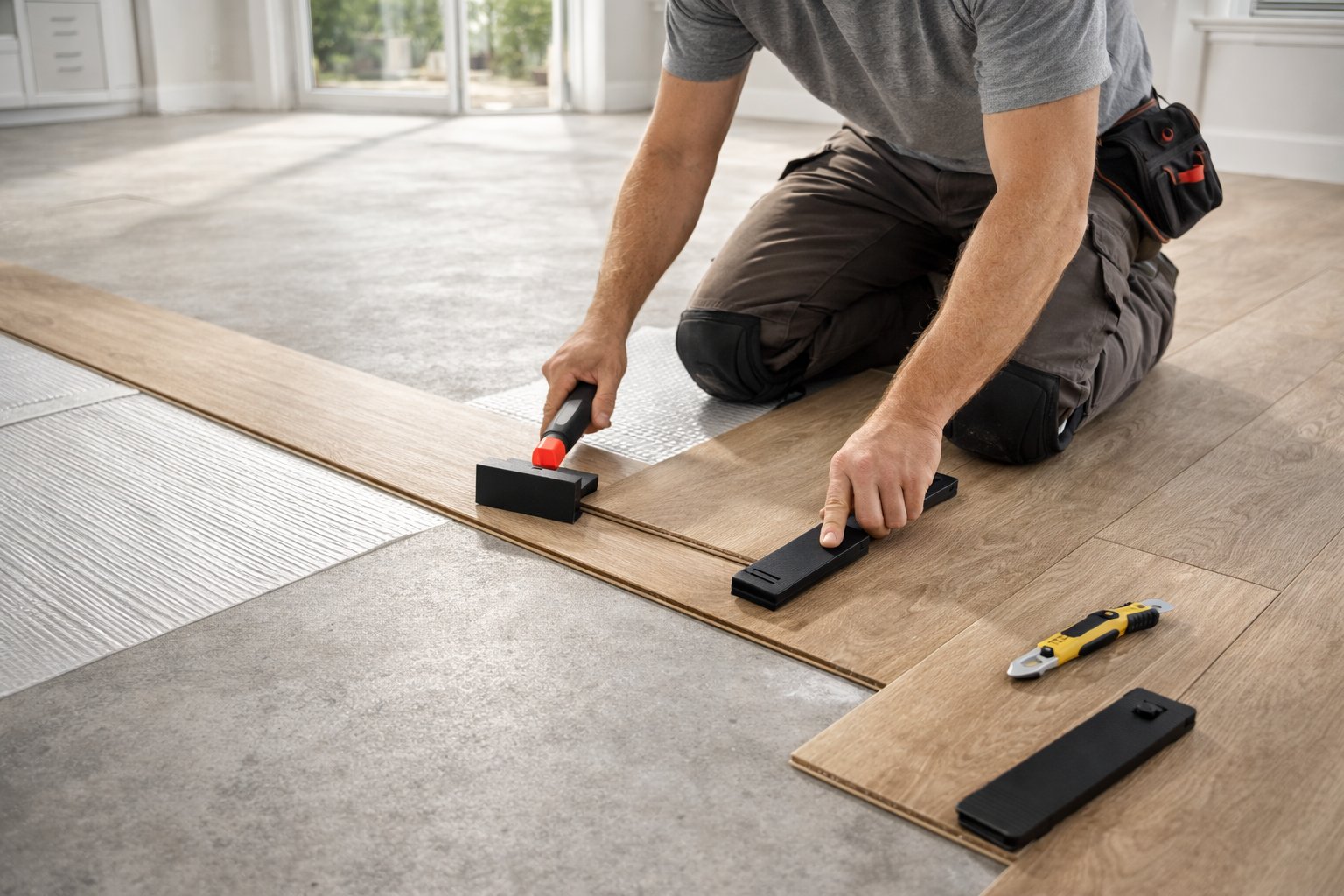
Concrete slabs are common in many Brooklyn homes, especially in basements, ground-level apartments, condos, and renovated brownstones. While concrete provides a solid foundation, installing luxury vinyl flooring over it requires more than just clicking planks together. Moisture, flatness, temperature changes, and preparation all play a role in whether the floor performs beautifully for years or starts showing problems far too soon.
Luxury vinyl flooring is an excellent option for concrete slabs when it’s installed the right way. The key is understanding what the slab is doing beneath the surface and planning the installation around it, not fighting against it.
Why concrete slabs behave differently than other subfloors
Concrete may look dry and stable, but it constantly interacts with moisture and temperature. Even slabs that are decades old can release vapor, especially in humid climates or below-grade spaces. Unlike plywood subfloors, concrete doesn’t flex—it transfers stress directly to the flooring above it.
That’s why luxury vinyl installations over concrete demand extra attention to moisture control, surface preparation, and product selection. Skipping these steps is one of the most common reasons vinyl floors fail prematurely.
Moisture testing isn’t optional
One of the biggest mistakes seen with slab installations is assuming concrete is dry just because it feels dry. Moisture vapor can travel up through the slab and get trapped beneath vinyl flooring, leading to adhesive failure, mold issues, or plank separation.
Professional installers use moisture tests to measure vapor emission levels before installation begins. Depending on the results, additional moisture mitigation steps may be needed, such as a vapor barrier or moisture-resistant underlayment. This step protects both the flooring and the home long term.
Surface flatness matters more than most expect
Luxury vinyl flooring is flexible by design. While that flexibility adds comfort underfoot, it also means the material will telegraph imperfections underneath. Dips, ridges, cracks, or uneven patches in concrete can cause vinyl planks or tiles to flex, click, or separate over time.
Before installation, the slab must be properly leveled. This often includes grinding down high spots and using self-leveling compounds to fill low areas. A smooth, flat surface ensures the locking system functions correctly and the finished floor looks seamless.
Choosing the right luxury vinyl for concrete slabs
Not all luxury vinyl products perform the same way over slabs. Click-lock floating floors are often preferred for concrete installations because they allow the floor to expand and contract naturally. Glue-down vinyl can also work well but requires precise moisture control and proper adhesives.
Thickness, wear layer, and core construction all matter. Rigid core products, such as SPC or WPC, are especially popular over concrete because they offer enhanced stability and resistance to minor subfloor imperfections.
Underlayment and vapor barriers explained
Some luxury vinyl products come with an attached underlayment, while others require a separate layer. When installing over concrete, the primary purpose of underlayment is moisture protection, not cushioning.
A proper vapor barrier prevents moisture from migrating into the flooring system. Using the correct underlayment—or avoiding redundant layers when one is already built in—ensures the warranty remains valid and the floor performs as intended.
Expansion gaps protect the finished floor
Even though luxury vinyl is more dimensionally stable than many flooring options, it still needs room to move. Expansion gaps around the perimeter of the room allow the flooring to adjust to temperature changes without buckling or lifting.
These gaps are later covered by baseboards or trim, keeping the final look clean while protecting the floor’s integrity. Skipping this step can lead to visible damage months after installation.
Temperature control and acclimation considerations
Concrete slabs can feel cool year-round, which affects how vinyl flooring behaves during installation. Flooring materials should be acclimated to the room’s temperature before installation begins, allowing planks or tiles to settle properly.
Maintaining consistent indoor temperatures during and after installation helps the floor lock together correctly and prevents expansion issues later on.
Professional installation reduces long-term risks
Installing luxury vinyl over concrete may look straightforward, but small mistakes can lead to big problems. From improper moisture protection to uneven surfaces or incorrect underlayment use, these issues often don’t appear until after furniture is moved in.
Experienced flooring professionals evaluate the slab, select the right materials, and follow proven installation practices. That attention to detail is what keeps luxury vinyl floors performing beautifully for years.
Picking the right installation approach for the space
Basements, high-rise apartments, and slab-on-grade homes all present different challenges. Foot traffic, humidity levels, and room usage should influence both product selection and installation method. Tailoring the approach to the space ensures the flooring looks great and holds up under daily life.
Speak with our flooring experts about the right installation approach today!
Installing luxury vinyl flooring over concrete slabs requires planning, proper materials, and expert execution. At Bay Ridge Carpet & Linoleum Corp, we bring decades of experience to every installation, helping Brooklyn homeowners choose the right luxury vinyl flooring and install it correctly from the start. Our shop-at-home service makes it easy to explore options and receive expert guidance without leaving home—reach out to schedule a consultation and put the project on solid footing.


