


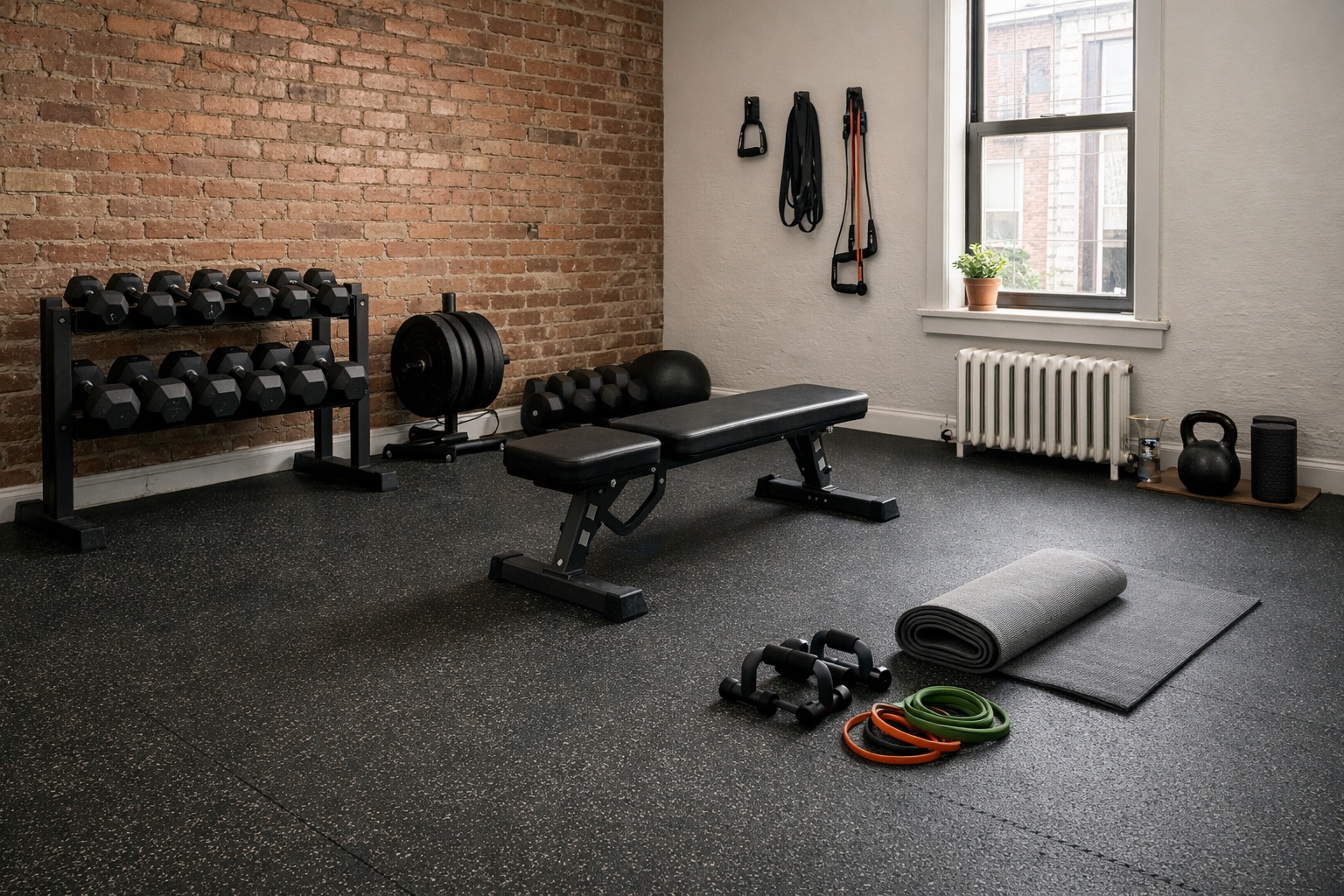
Brooklyn living has its own rhythm. Brownstones with original details, pre-war walk-ups with narrow staircases, and modern apartments stacked close together all share one thing in common: limited space and shared walls. As more homeowners carve out workout areas in spare bedrooms, basements, or even living room corners, choosing the best rubber flooring for a home gym becomes more than a style decision. It becomes a question of comfort, durability, and consideration for neighbors downstairs.
Rubber flooring has quickly become a top choice for Brooklyn home gyms because it handles heavy equipment, absorbs impact, and helps reduce noise in tightly packed buildings. But not all rubber floors are created equal. The right option depends on the layout of the space, the type of workouts planned, and the structure of the building itself.
Why rubber flooring works so well in Brooklyn buildings
In brownstones and apartments, floors often sit directly above another family’s ceiling. Dropping weights or even repetitive jumping can travel through wood joists and plaster. Rubber flooring naturally absorbs shock and dampens sound, making it ideal for strength training, HIIT sessions, yoga, and cardio routines.
Unlike traditional hardwood or laminate, rubber has built-in flexibility. That resilience protects both the subfloor and the equipment while creating a safer surface underfoot. It also offers excellent traction, which is important in compact home gyms where every square foot counts.
In older Brooklyn brownstones, basements may have uneven concrete slabs. In these spaces, thicker rubber tiles or rolls can help smooth minor imperfections while providing a stable workout surface.
Rubber tiles vs. rubber rolls for small home gyms
One of the first decisions involves format: interlocking tiles or continuous rolls.
Rubber tiles are especially practical for apartment dwellers. They can be carried up narrow staircases and installed without adhesives. If a section gets damaged, a single tile can be replaced rather than redoing the entire floor. Tiles also allow flexibility if the gym area expands over time.
Rubber rolls, on the other hand, create a seamless appearance and tend to shift less under heavy equipment. They work beautifully in larger brownstone basements or dedicated workout rooms where a wall-to-wall look feels intentional and polished.
Both options pair well with adjacent surfaces such as hardwood or laminate. For homeowners exploring broader flooring upgrades, reviewing different materials like rubber flooring options in Brooklyn can help coordinate gym areas with the rest of the home’s interior style.
Thickness matters more than most people realize
Light workouts and multipurpose rooms
For yoga, stretching, light dumbbells, or stationary bikes, 6mm to 8mm rubber flooring is often sufficient. This thinner profile works well in apartments where ceiling height may already be limited. It provides cushioning without dramatically raising floor height near doorways.
Strength training and free weights
For heavier lifting or kettlebell work, 3/8-inch to 1/2-inch thickness offers better shock absorption. In basement gyms within Brooklyn brownstones, thicker rubber can help minimize vibration transfer to upper floors.
Serious weight drops and power racks
For dedicated lifters using barbells, platforms, or squat racks, 3/4-inch or thicker rubber flooring is typically recommended. This added density protects both the concrete slab below and the structural framing above.
Choosing the correct thickness not only protects the building but also enhances the longevity of the floor itself.
Noise control in shared-wall environments
Living above neighbors
In apartment settings, impact noise is often the biggest concern. Rubber flooring significantly reduces vibration compared to bare wood or tile. For additional sound control, pairing rubber with an underlayment layer can further buffer noise.
Some homeowners combine rubber flooring with area rugs in adjacent spaces to create a balanced acoustic environment. Exploring options like area rugs in Brooklyn can help soften nearby living areas while keeping the gym zone functional.
Brownstone considerations
In historic Brooklyn brownstones, original joists and plaster ceilings may transmit more vibration than modern construction. Thicker rubber flooring or double-layer systems can help address this. It’s also important to ensure the subfloor is level and structurally sound before installation.
Moisture resistance for basement gyms
Many brownstones feature partially below-grade basements that may experience humidity fluctuations. Rubber flooring naturally resists moisture and won’t warp like wood-based materials.
However, proper preparation remains key. A moisture barrier over concrete can help protect both the flooring and any equipment stored in the space. Good ventilation also keeps the area fresh and comfortable year-round.
Rubber’s resistance to mold and mildew makes it particularly practical in these lower-level gym conversions.
Design choices that complement Brooklyn interiors
Rubber flooring has evolved well beyond the black speckled look found in commercial gyms. Modern options include subtle fleck patterns, solid charcoal tones, and even custom color blends that align with contemporary or classic brownstone aesthetics.
For apartment dwellers who want a workout space that blends into an open-concept living area, neutral rubber tones can create a cohesive appearance. When thoughtfully selected, gym flooring does not have to feel industrial or out of place.
Installation insights for tight Brooklyn spaces
Carrying large flooring materials up narrow stoops and stairwells can be challenging. Tiles may be easier to maneuver in multi-story walk-ups. In basement conversions, ensuring adequate clearance and access before delivery simplifies the process.
Professional installation can also help ensure seams are tight, edges are properly finished, and transitions to adjacent rooms are smooth and safe.
Start your Brooklyn home gym project with confidence
Our family-owned flooring company has been serving Brooklyn homeowners for more than four decades, bringing careful planning and precise installation to every project. Whether it’s a compact apartment workout space or a fully finished brownstone basement gym, we focus on durability, comfort, and long-term performance. Connect with us through our contact us page to schedule a shop-at-home consultation across Brooklyn, Staten Island, Manhattan, Queens, or the Bronx and get expert guidance tailored to your space.


